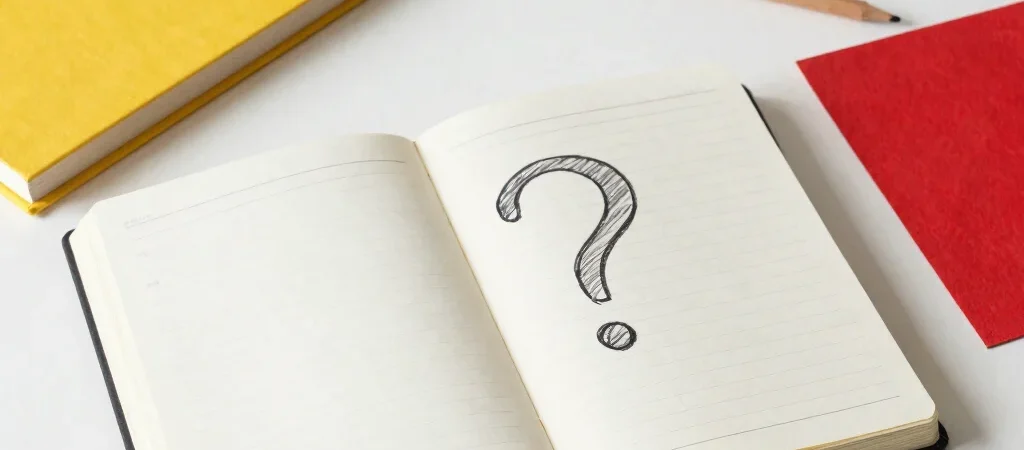
You start a book about memory, then notice that its questions turn up in a painting, a history podcast, and the way you revise your own notes. That is not a distraction; it can be the beginning of a personal curriculum. The useful move is to choose a question that gives your curiosity somewhere to go.
Choose a question with room
A strong study question is narrower than “learn about art” but open enough to invite different fields. Try “How do people remember the past?” or “What makes a city feel alive?” Either can lead from a novel to a museum visit to urban planning without requiring you to pretend those subjects are the same.
Write the question at the top of a page and add three starting points: one book, one reliable article or lecture, and one object or experience to examine. For the city question, that might mean a book on public space, a neighborhood walk, and a few sketches of where people gather. Keep the first plan small enough to begin this week.
Give each source a job
Different sources are useful for different kinds of understanding. A history book can establish chronology, while a novel may make a period’s tensions easier to imagine; neither should be asked to do the other’s work. As you read or listen, note what each source helps you see and what it leaves unresolved.
A personal curriculum is not a stack of completed titles. It is a set of connections you can explain in your own words, including the points where two sources disagree. If you use a recommended book or learning tool linked from Brainlumen, those affiliate links may earn us a commission, at no additional cost to you.
Review the thread weekly
At the end of the week, spend ten minutes writing what changed in your understanding, what still feels uncertain, and what you want to investigate next. One good follow-up question is enough to guide the next week’s reading. The curriculum grows by returning to a question with better context, not by collecting the longest possible list.

