
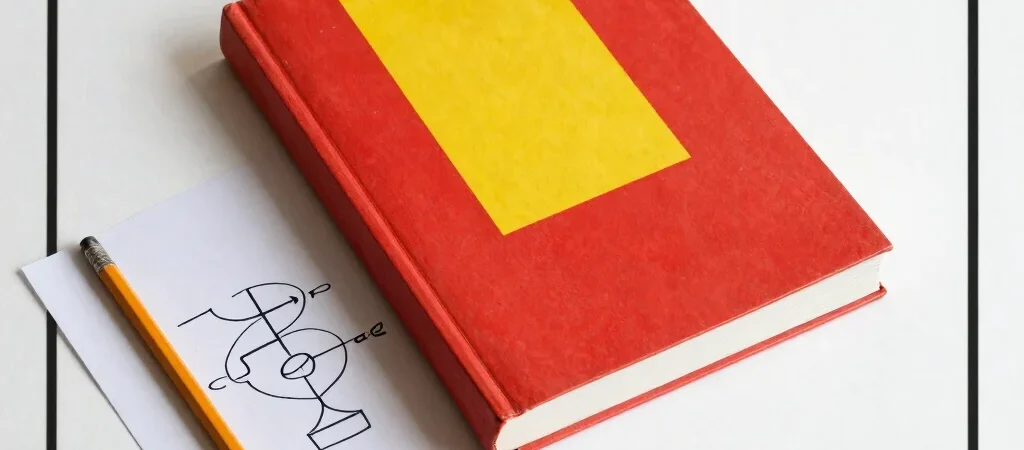
You finish a chapter, glance back at the page, and every explanation seems obvious. The test comes when the book is closed. Trying to retrieve an idea before rereading it makes gaps visible while there is still time to work on them.
Close the page and recall
After a section, turn the book over or move away from the screen and write down the main idea from memory. Add the steps in an argument, the terms you can define, or a rough diagram of how a process works. Keep the attempt brief; the point is to see what you can produce without the answer in front of you.
Then reopen the source and compare. Mark what you missed or distorted, not just what you got right. A wrong recollection can be useful if you correct it now and identify what led you astray.
Turn notes into prompts
A note becomes a better study aid when it asks you to do something. Instead of copying “photosynthesis converts light energy,” make a prompt that asks you to explain the process in your own words or distinguish its inputs from its outputs. For a history reading, ask what changed, what persisted, and what evidence supports the claim.
Keep prompts small enough to answer without rebuilding the entire lesson. If a question has several parts, split it up; a tidy stack of impossible cards is not a study plan. Revisit prompts across separate sessions, and spend more time on the ones that still require effort.
Let errors guide the next session
End by choosing one weak spot to revisit, rather than rereading everything from the beginning. You might sketch the process again, explain an argument aloud, or make a fresh example that tests the same idea. The practical rule is simple: attempt recall, check the source, then direct your next round toward what you could not yet explain.

